Trichy: A Picture BookContents
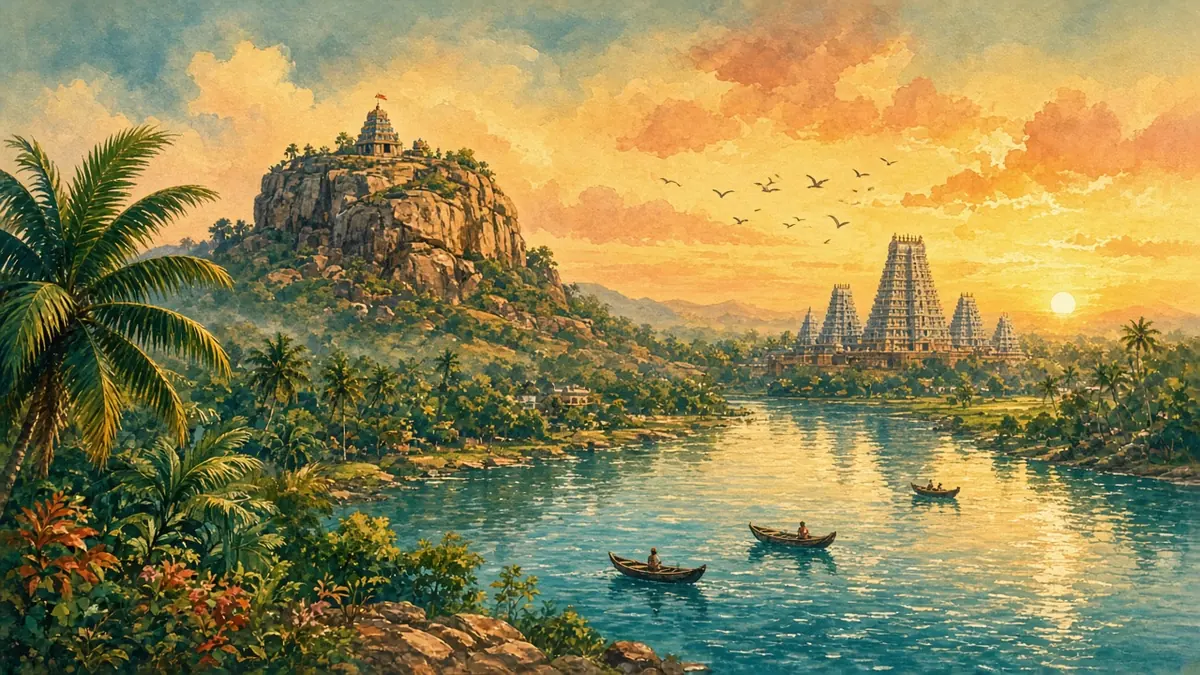
Painting of Trichy at sunrise: the Rockfort hill, the Kaveri river and the towers of Srirangam.
A picture book

The Story of Trichy

From an ancient Chola capital to a busy modern city: the tale of Tiruchirappalli, its great rock, its rivers and its temples.

Begin the story

Trichy, or Tiruchirappalli, sits in the middle of Tamil Nadu, on the banks of the Kaveri river. Turn the pages to travel through about 2,000 years, one picture at a time. Some pages are recorded history, and some are legends or traditions. Each page tells you which.

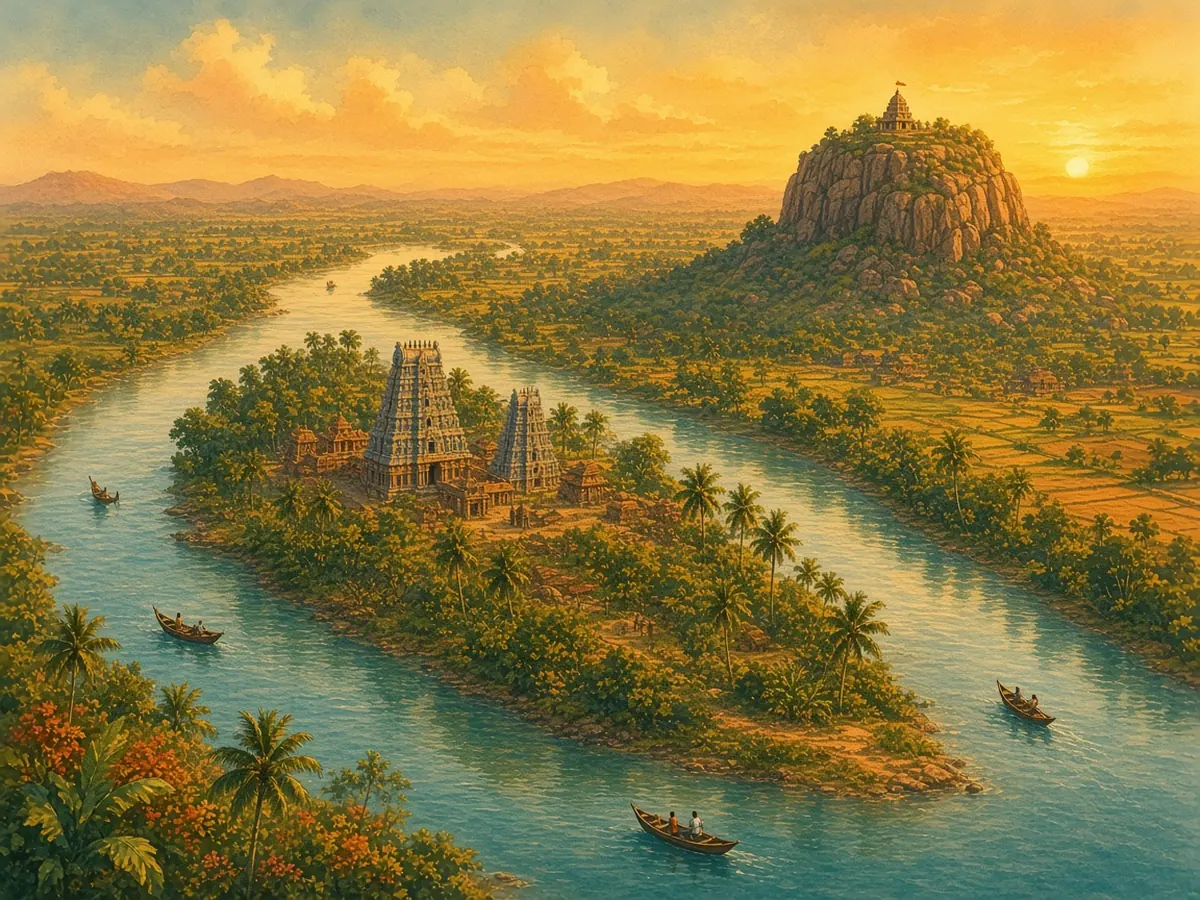
Painting of the Kaveri river splitting around the island of Srirangam, with the Rockfort hill nearby.1
The landRecorded history

Where the River Splits

Near Tiruchirappalli, the great Kaveri river splits in two. The northern branch is called the Kollidam, and between the two branches lies the island of Srirangam.

Close by, a huge hill of bare rock called the Rockfort rises from the flat plain. Geologists estimate it to be billions of years old, among the oldest rocks on Earth.

Everything in this story happens around these rivers and this rock.
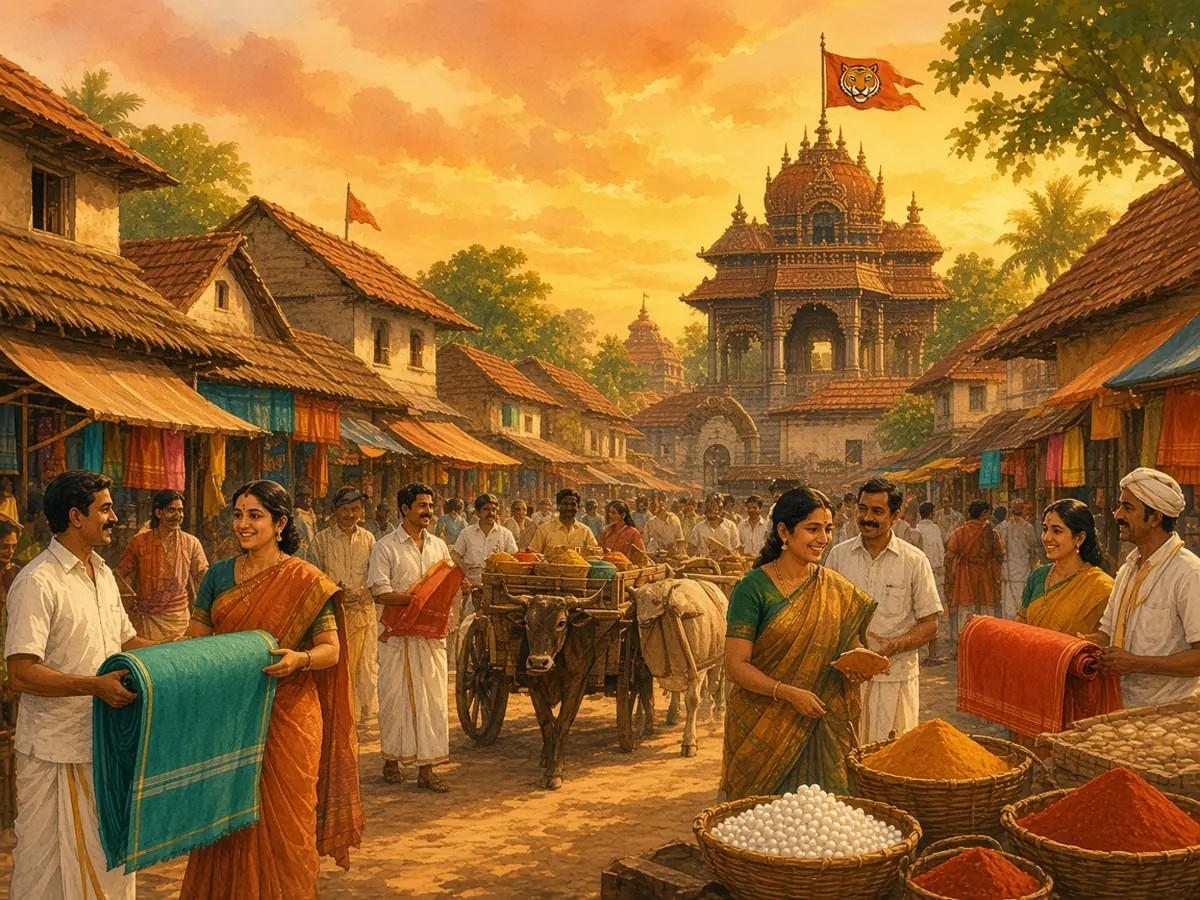
A busy ancient Tamil market town with cloth merchants, pearls and spices, and a palace with a tiger banner.2
From about the 3rd century BCERecorded history

Uraiyur, the First Capital

More than two thousand years ago, a town called Uraiyur stood here. It was the capital of the Early Cholas, one of the great Tamil kingdoms of the Sangam age.

The Greek writer Ptolemy knew it as “Orthoura” in the 2nd century CE. Today Uraiyur is a busy neighbourhood of Trichy.

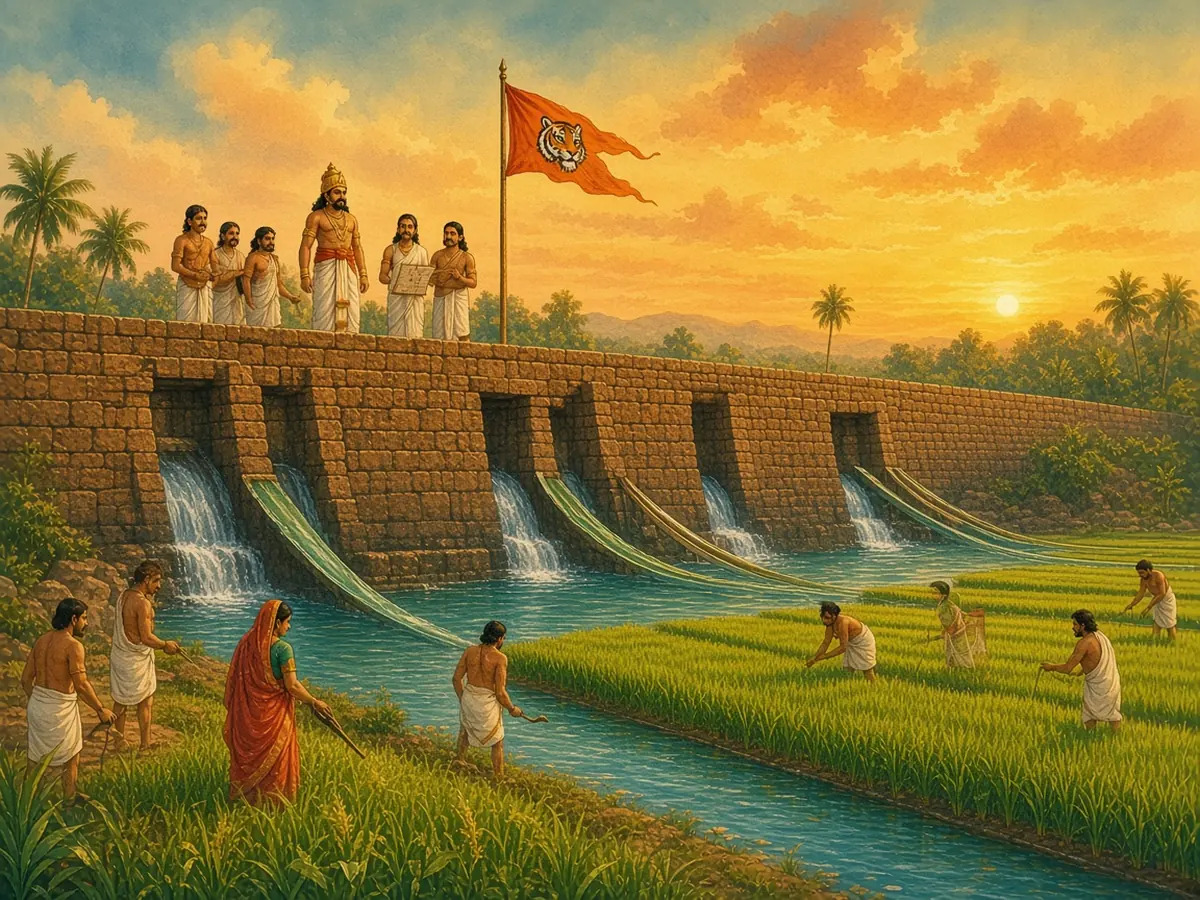
A long stone dam across the Kaveri sending water into canals and green rice fields, with an ancient king and engineers watching.3
About 1,900 years ago (traditional date)Tradition

Karikala and the Great Stone Dam

Tradition says that Karikala Chola built the Kallanai, or “Grand Anicut”, across the Kaveri around 100 to 150 CE. It is a long dam of rough stone, about 329 metres long, that sends river water into canals for rice fields.

The dam is still in use today, making it one of the oldest working dams in the world. The exact date and builder come from tradition, but the dam itself is real, and you can visit it.

Parts of this page come from tradition, so dates and details may be debated by historians.

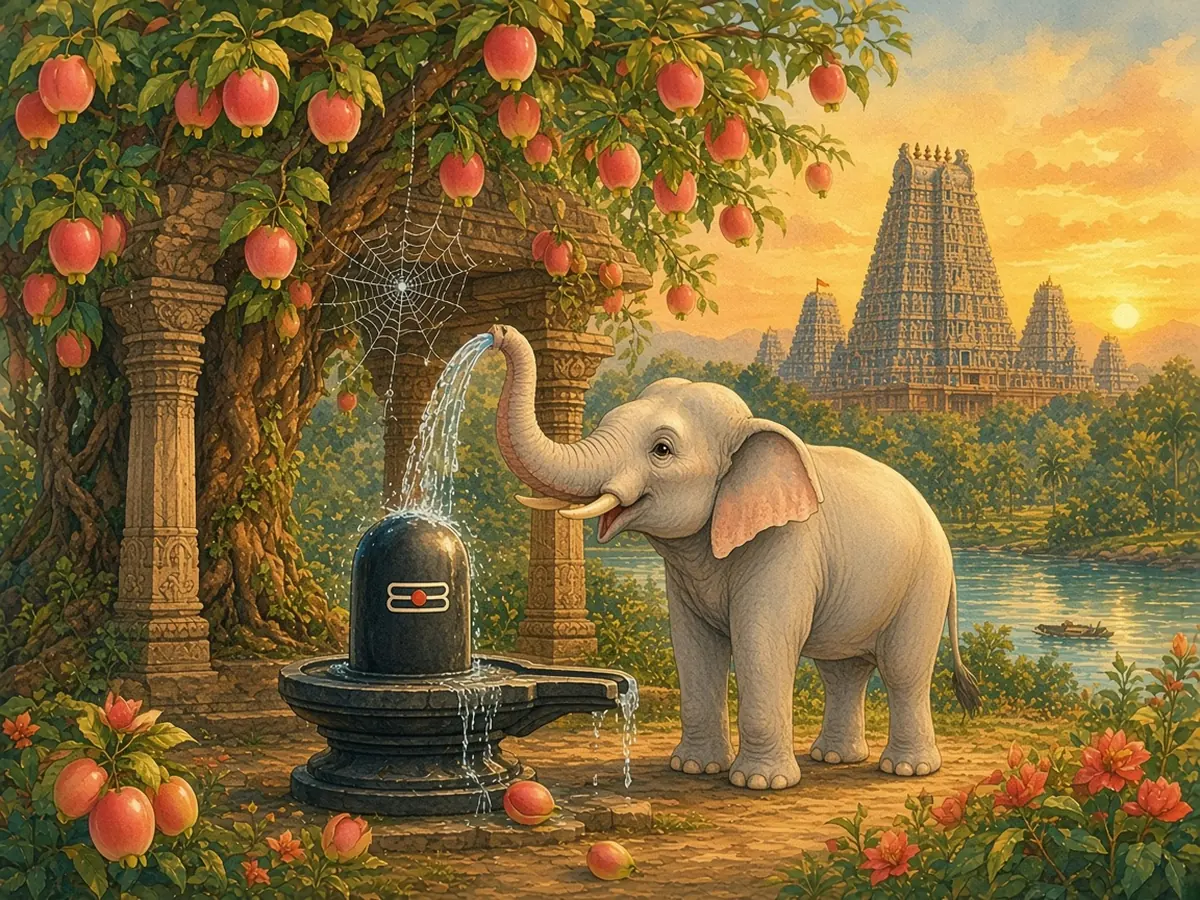
An elephant pouring river water over a stone lingam under a jambu tree while a spider's web shades it, with temple towers behind.4
Legend of ThiruvanaikavalLegend

The Elephant and the Spider

On the Kaveri's bank stands the Jambukeswarar temple at Thiruvanaikaval, one of five great Shiva temples linked to the elements. This one stands for water.

A famous legend tells of an elephant who washed the sacred lingam with river water each day, and a spider who spun a web above it for shade. Tradition says the spider was reborn as the Chola king Kochchengannan, said to have built seventy temples.

This is a legend, a story told for centuries. It is not recorded history.

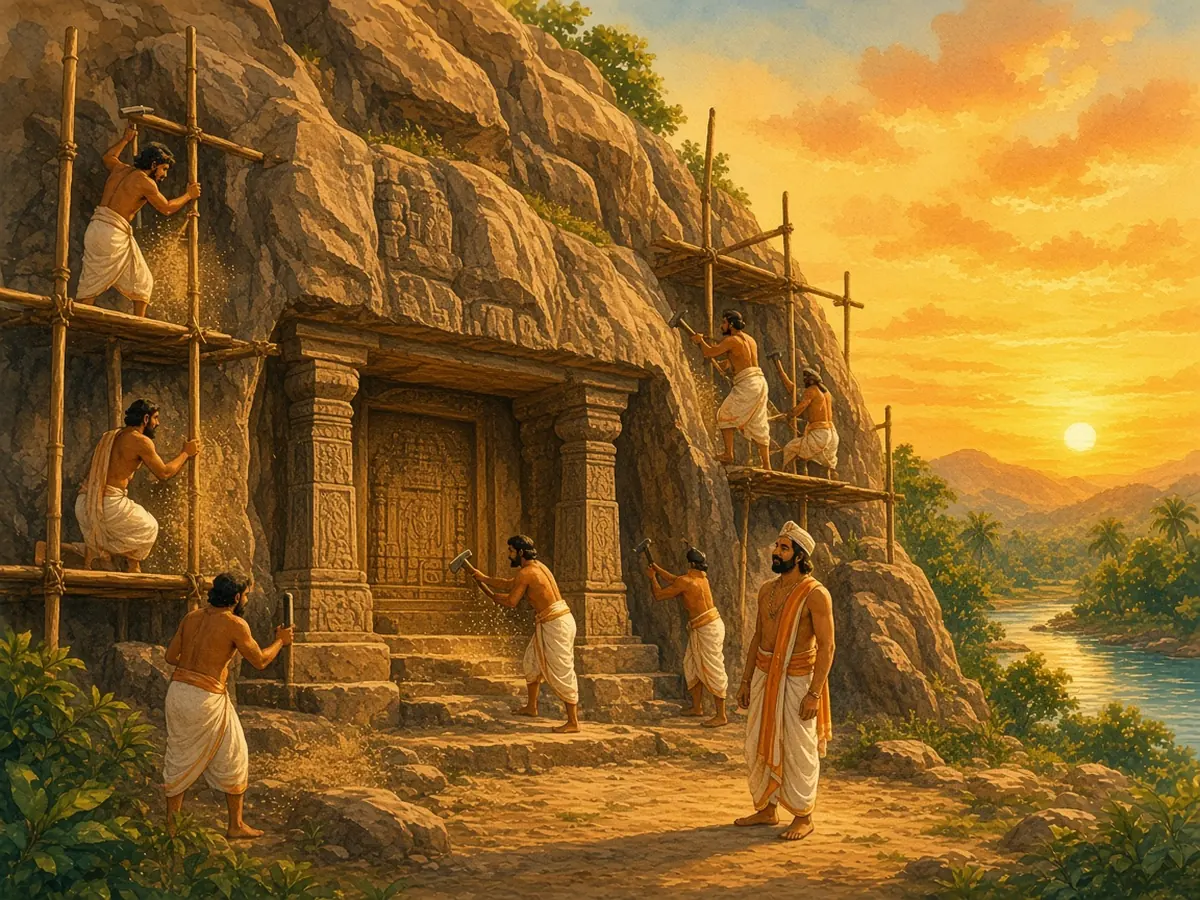
Pallava sculptors carving a cave temple with pillars into a granite hillside while a king watches.5
About 600 CERecorded history

Temples Cut Into Rock

Around 1,400 years ago, the Pallava king Mahendravarman I had temples carved straight into rock. Sculptors cut pillars and shrines out of the hillside to make cave temples.

Some of these cave temples are on the Rockfort and can still be seen today. Mahendravarman was also a poet, painter and musician, and he wrote a funny Sanskrit play.

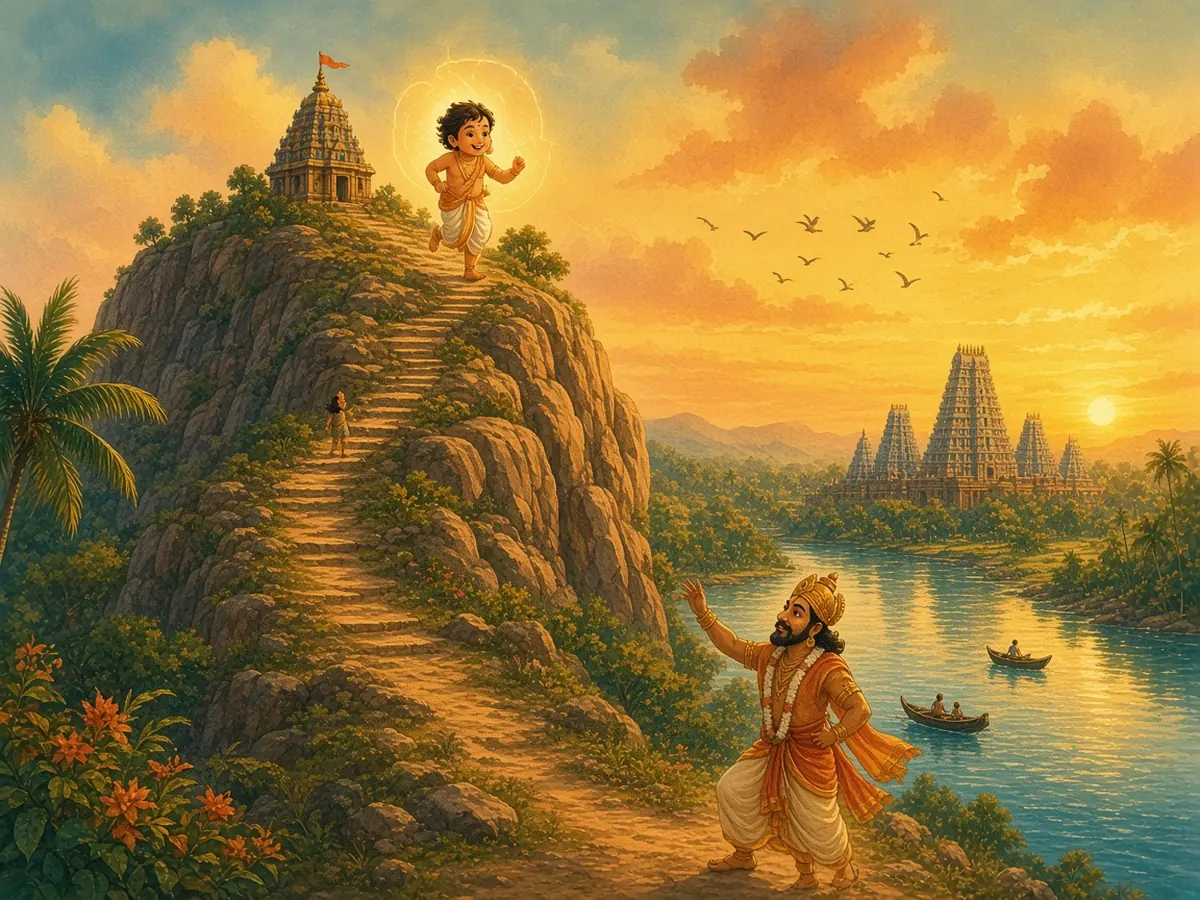
A young boy, secretly the god Ganesha, running up carved stone steps to a small temple on the Rockfort while a king looks on from below.6
Legend of the RockfortLegend

The Rock and Ucchi Pillayar

High on top of the Rockfort, about 83 metres up, sits the small Ucchi Pillayar temple of Ganesha. Visitors climb steps carved into the rock to reach it and see Trichy, Srirangam and both rivers.

A legend says that Vibhishana, from the Ramayana, was carrying an idol of Ranganatha to Lanka. He handed it to a clever boy, who was really Ganesha, and the boy set it down by the Kaveri, where it stayed at Srirangam. Then the boy ran up the rock, and the temple stands where he stopped.

This is a legend, a story told for centuries. It is not recorded history.

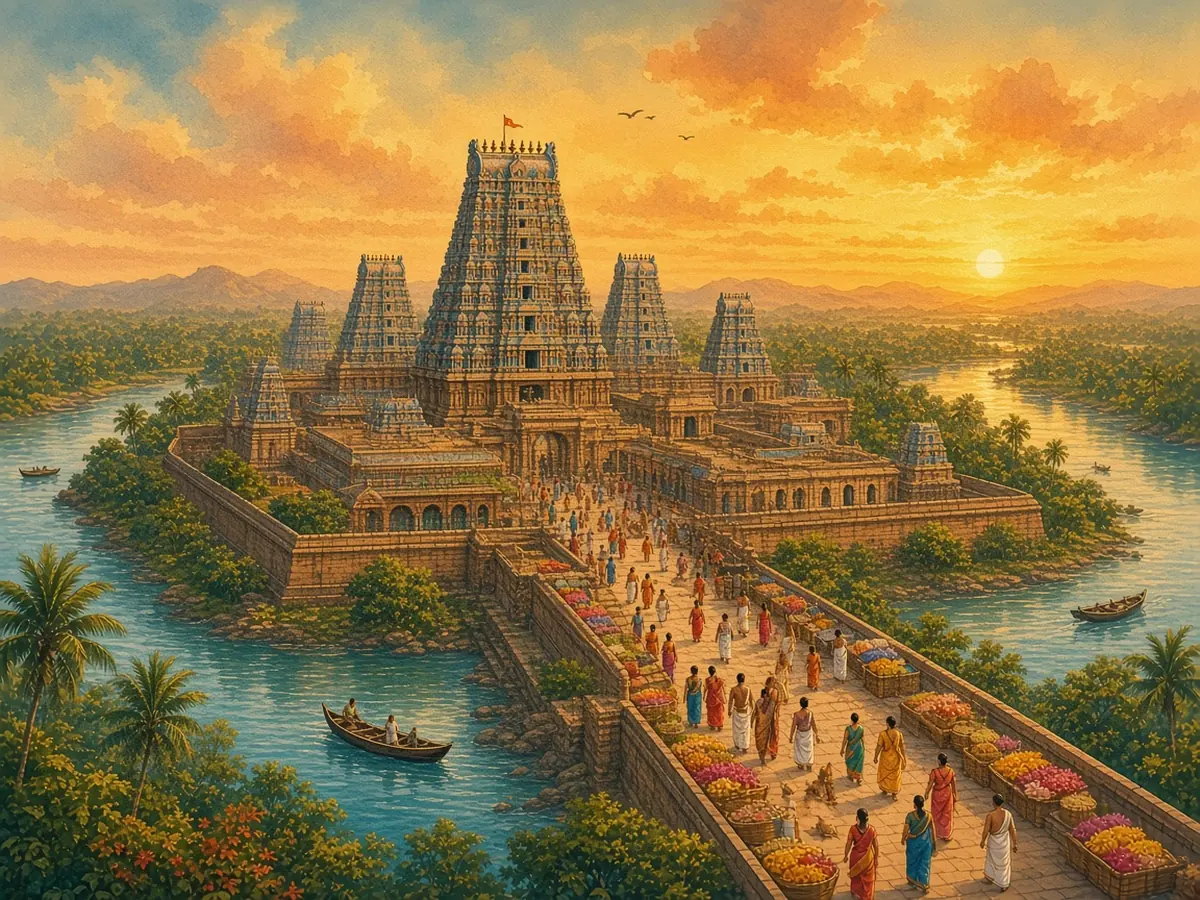
The great Srirangam temple on its island with many tall gateway towers, a busy street with flower sellers and devotees.7
A living temple through the centuriesRecorded history

Srirangam, the Temple Town

Srirangam is a whole temple town on an island between two rivers. The Ranganathaswamy temple has seven walled enclosures and 21 gateway towers, and covers about 63 hectares.

Its main tower, the Rajagopuram, is 73 metres tall and was completed in 1987. Poet-saints called the Alvars sang its praises, and the teacher Ramanuja, from the 11th century, is closely linked with the temple.

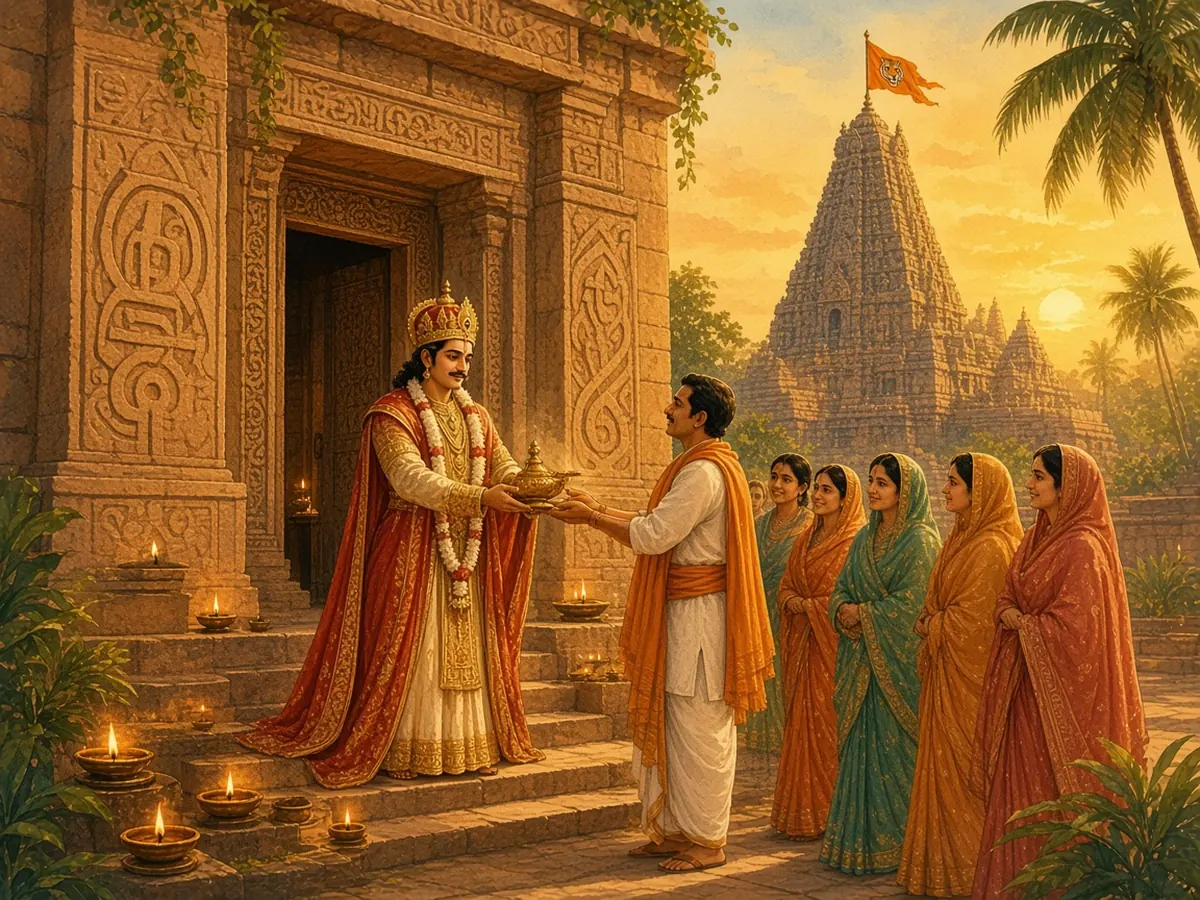
A Chola king in royal dress offering a gift lamp to a priest at a stone temple doorway, with women in sarees looking on.8
About the 9th to 13th centuriesRecorded history

The Medieval Cholas

After the Pallavas, the medieval Cholas ruled this region until the 13th century. Their great kings ruled from nearby Thanjavur.

Kings and queens gave gifts to temples, and scribes carved the records into temple walls. One Chola king, for example, gave Srirangam a golden serpent couch for Lord Ranganatha.

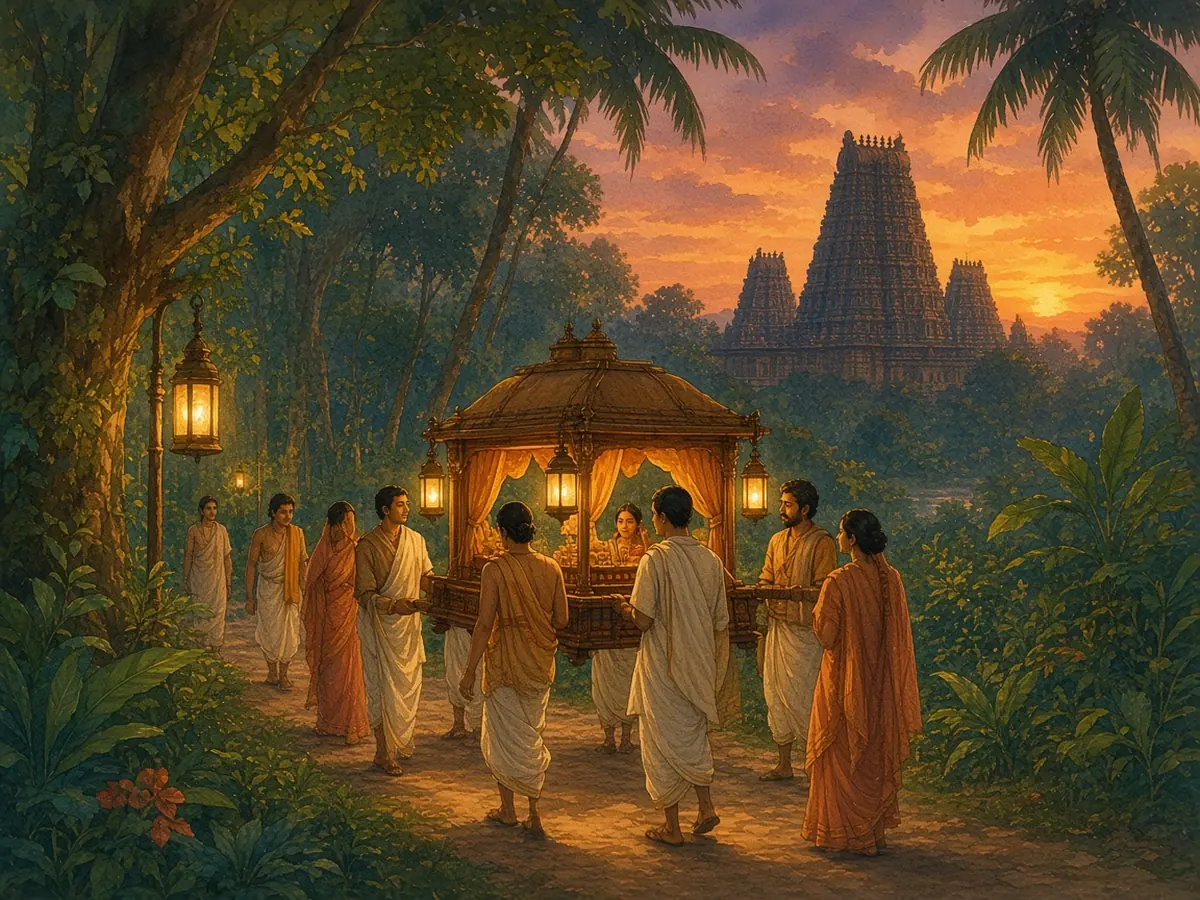
A small group of devotees quietly carrying a covered palanquin with a sacred image along a forest path at dusk, with temple towers behind.9
The 14th centuryTradition

Hard Times and a Homecoming

The Pandyas ruled Trichy until 1311, when armies of the Delhi Sultanate swept through the south. Srirangam’s Ranganatha image disappeared for more than fifty years, and tradition says devotees carried it away to keep it safe.

In 1371 a Vijayanagara prince, Kumara Kampana, took Tiruchirappalli. The temple was restored, and tradition says the image was brought home again.

Parts of this page come from tradition, so dates and details may be debated by historians.

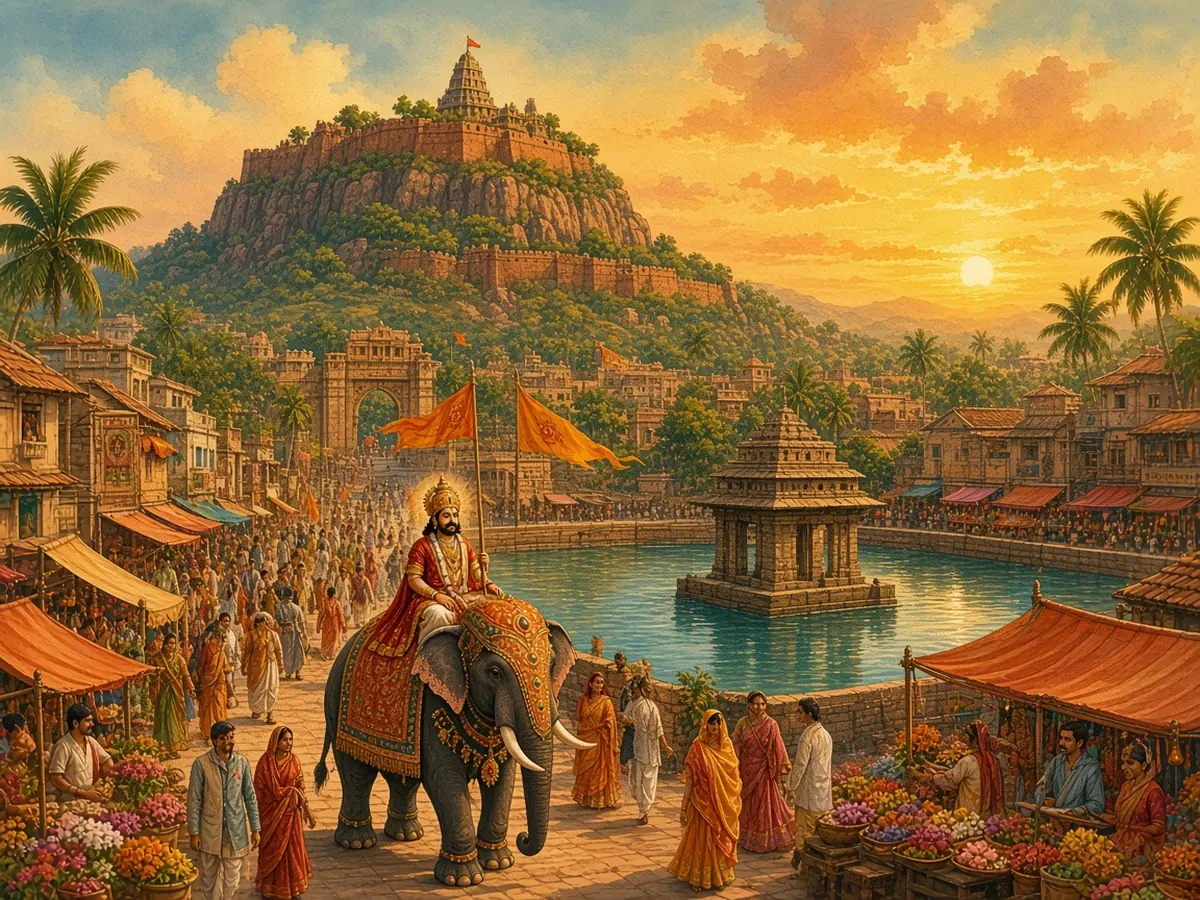
A Nayak king on a decorated elephant in a procession beside the Teppakulam tank, with the fortified Rockfort rising behind.10
1529 to 1736Recorded history

The Nayak Capital

After the Vijayanagara empire faded, the Madurai Nayaks rose to power. Vishwanatha Nayak (about 1529 to 1564) is said to have built walls around the Srirangam temple and the Teppakulam tank at the foot of the Rockfort.

Trichy was the Nayak capital from 1616 to 1634 and again from 1665 to 1736. The Rockfort, first cut by the Pallavas, was rebuilt and strengthened by the Nayaks and earlier Vijayanagara rulers.

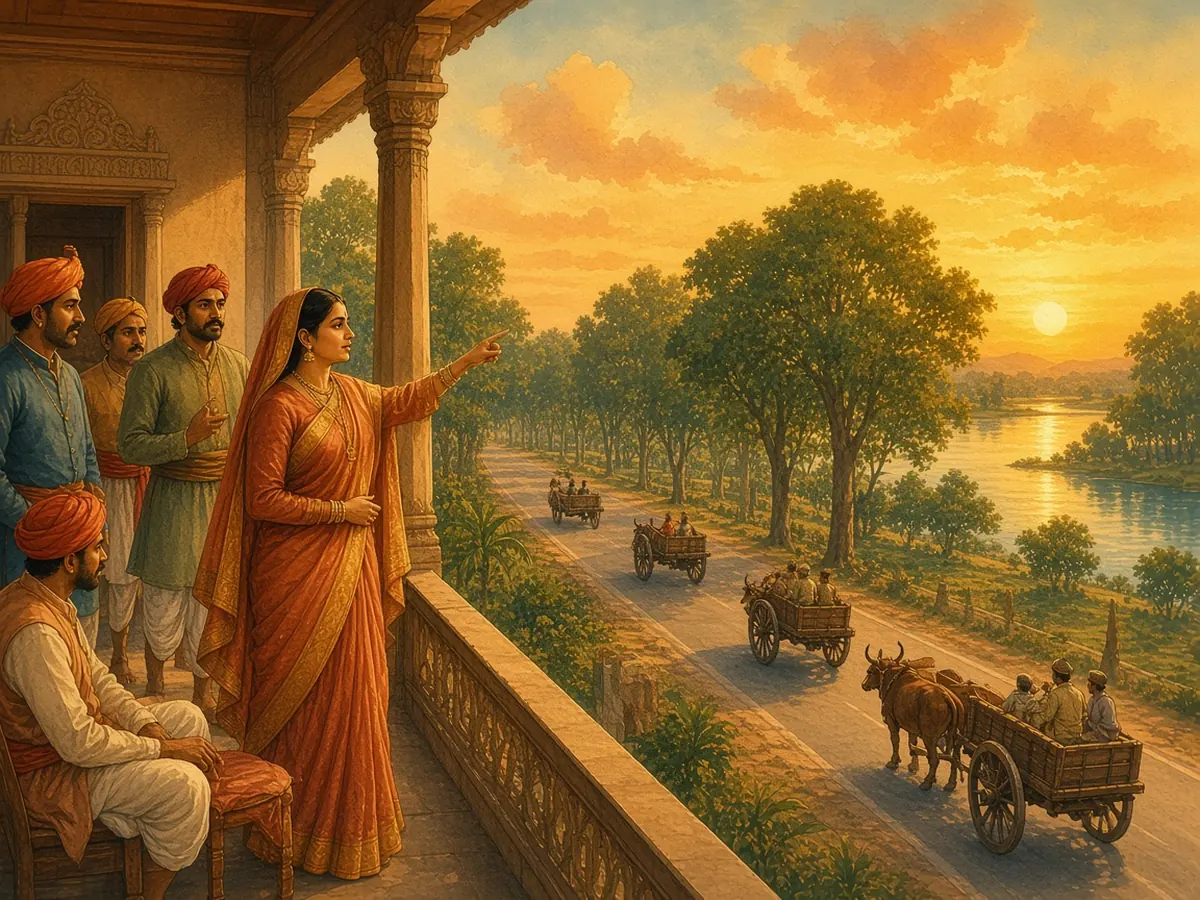
Queen Mangammal on a palace balcony pointing at a new road lined with shady trees, with bullock carts and travellers.11
1689 to 1704Recorded history

Rani Mangammal

Rani Mangammal ruled as regent for her young grandson from 1689 to 1704, and Trichy was her capital. She is still remembered as a wise administrator.

She built roads, planted shady avenue trees, repaired irrigation channels, and built temples, tanks and rest houses for travellers. In Trichy, the Rani Mangammal Mahal, in the Nayak palace, is now a museum.

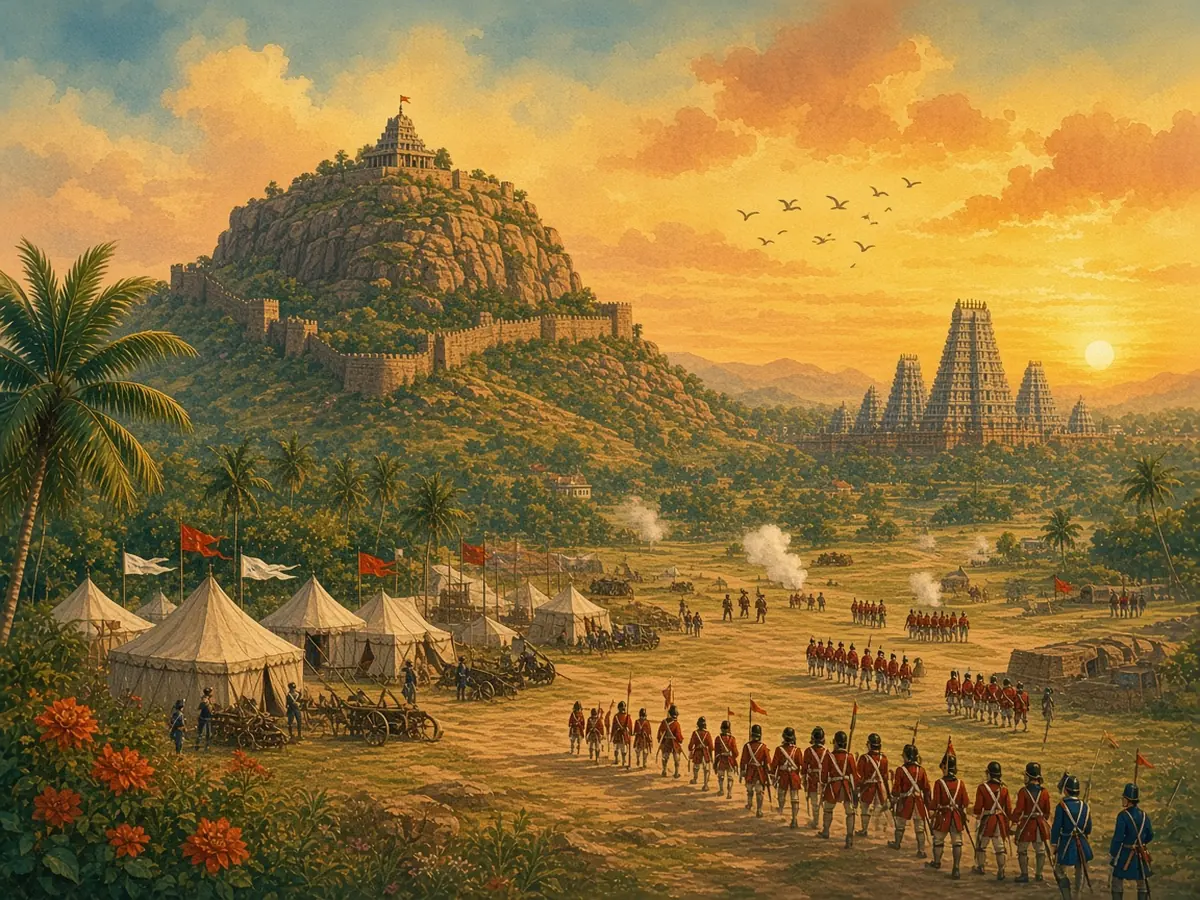
A distant view of the Rockfort with camps of tents and neat lines of red-coated and blue-coated soldiers on the plain.12
1751 to 1753Recorded history

The Siege of Trichinopoly

In 1751, Chanda Sahib, helped by the French, besieged Trichinopoly, where Muhammad Ali Wallajah held the fort with British help. To draw the attackers away, a young Robert Clive seized Arcot, and the siege dragged on.

In April 1752 British reinforcements under Stringer Lawrence arrived. The besiegers retreated to Srirangam island and surrendered in June 1752, and in 1753 the Battle of Golden Rock ended in another British win.

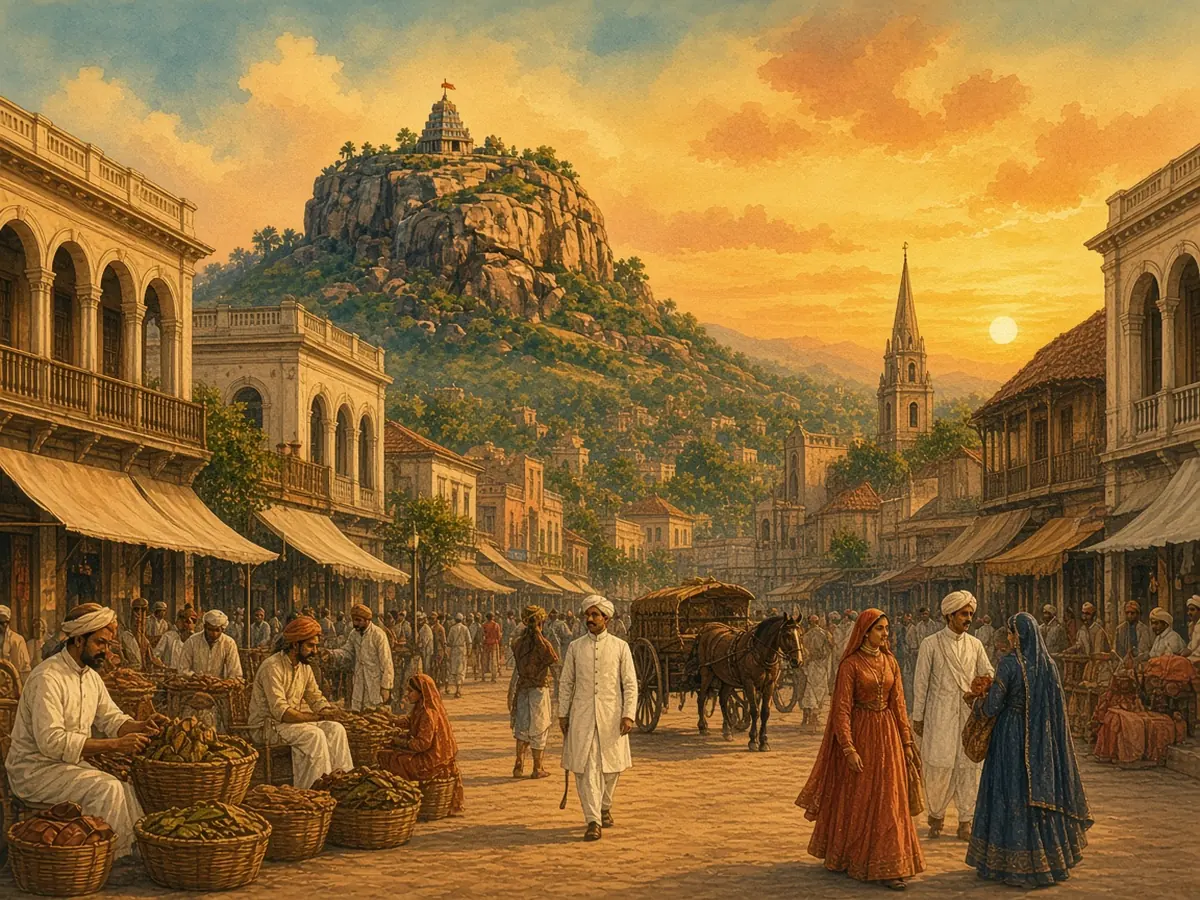
A colonial-era Trichinopoly street below the Rockfort with arched buildings, baskets of leaves and leather goods, and a horse cart.13
1801 to the early 1900sRecorded history

Trichinopoly Under the British

In 1801 the British took over the Carnatic region, and Trichinopoly became the capital of a district in the Madras Presidency. By 1871 it had 76,530 people, making it the second-largest city in the presidency after Madras.

It was famous for its tanned leather and for the Trichinopoly cigar, a type of cheroot. At its peak, more than 12 million cigars were made and exported each year.

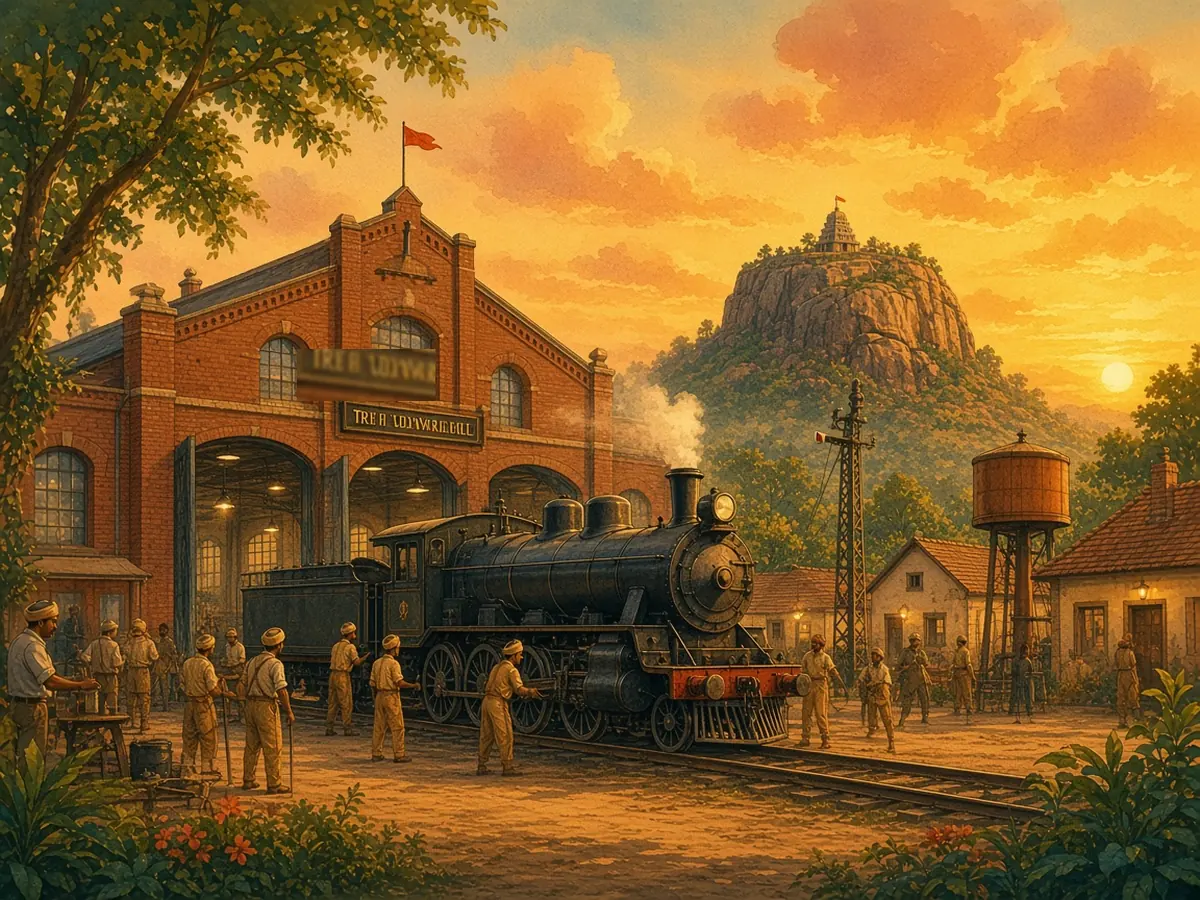
A steam locomotive outside a brick railway workshop with workers in khaki, and a golden rock hill behind.14
1859 to 1928Recorded history

Trains and Golden Rock

In 1859 a railway line linked Tiruchirappalli with Nagapattinam, and in 1874 the South Indian Railway made Trichy its headquarters. The foundation stone of the great Golden Rock workshop was laid in 1926, and it was finished in 1928.

The railway colony was one of the first places in Trichy to have electric light. In World War II the workshop even repaired Royal Air Force planes, and it still maintains trains today.

A calm procession of marchers in white cloth walking along a tree-lined road toward the sea, with the Rockfort behind.15
1928 and 1930Recorded history

Marching for Freedom

Trichy took part in India’s freedom movement. In 1928, railway workers joined the South Indian Railway Strike.

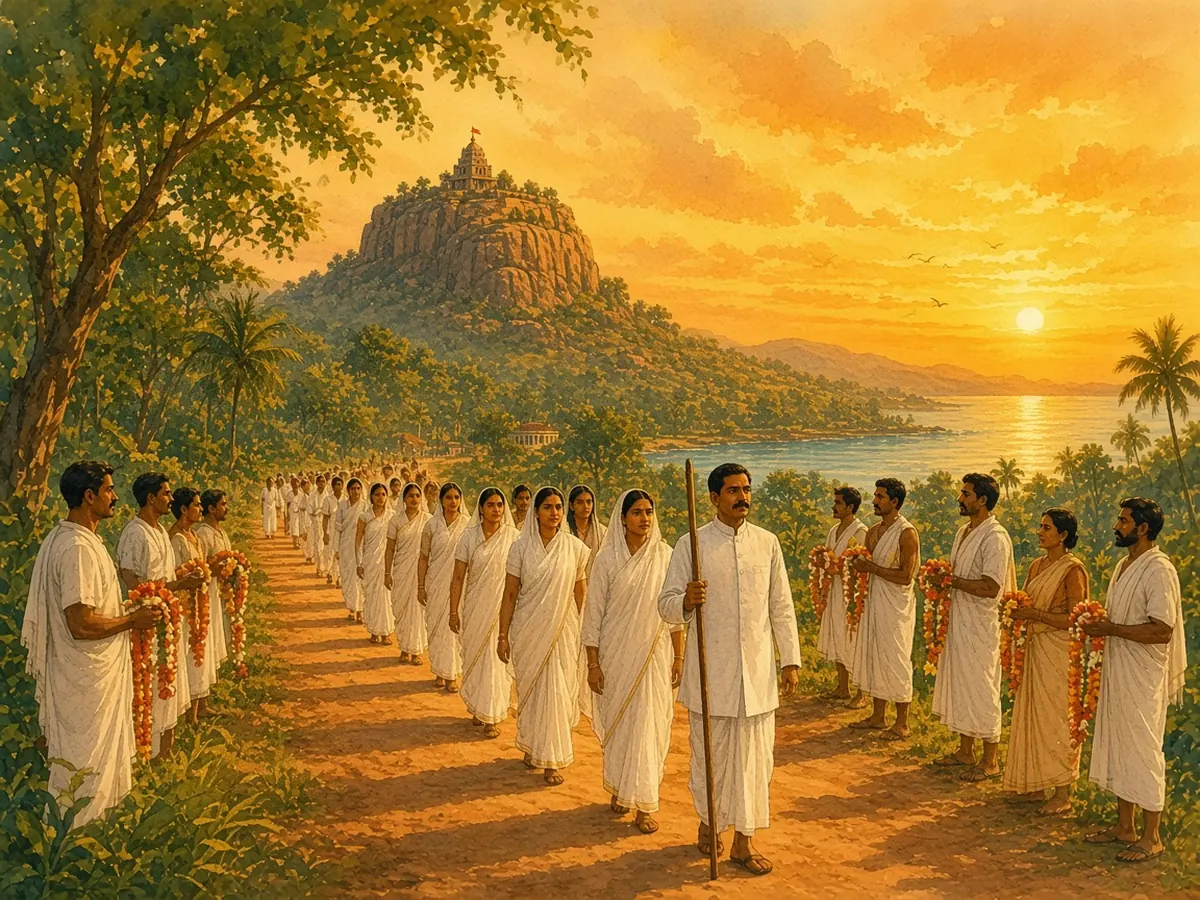
In 1930 the city became the base for C. Rajagopalachari’s Vedaranyam salt march, held alongside the Dandi March. The marchers walked peacefully, and people along the road welcomed them.

A big modern factory hall with a steel boiler on the left and students crossing a green college lawn on the right.16
The 1960sRecorded history

Factories and Classrooms

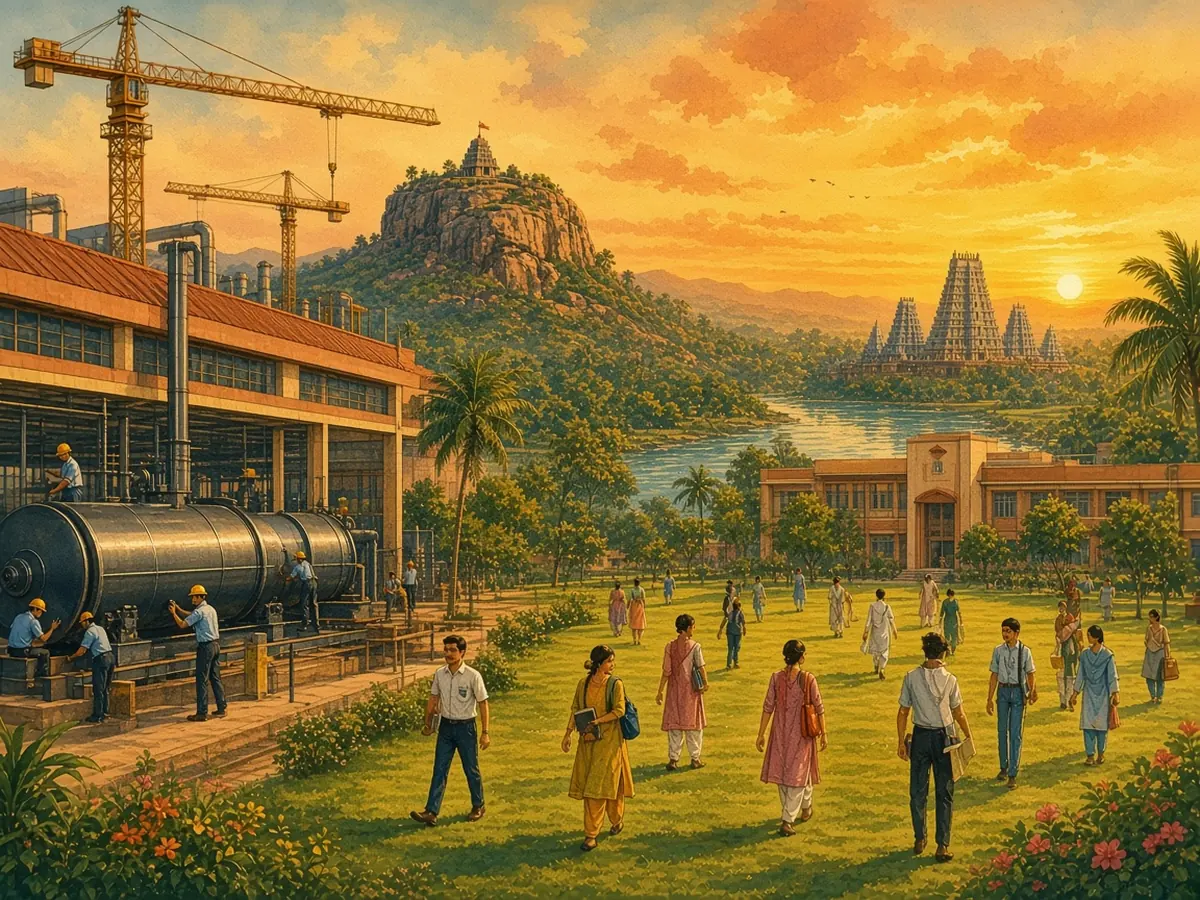
In 1964 Bharat Heavy Electricals Limited, or BHEL, was set up to run new heavy-engineering plants, including one at Tiruchirappalli. Trichy’s units make boilers and pressure parts for power plants.

The same year, the Regional Engineering College opened in the city. It is now the National Institute of Technology, Tiruchirappalli, or NIT Trichy.

Modern Trichy at golden hour seen from the Rockfort steps, with families, a bridge with buses, and Srirangam towers glowing.17
NowRecorded history

Trichy Today

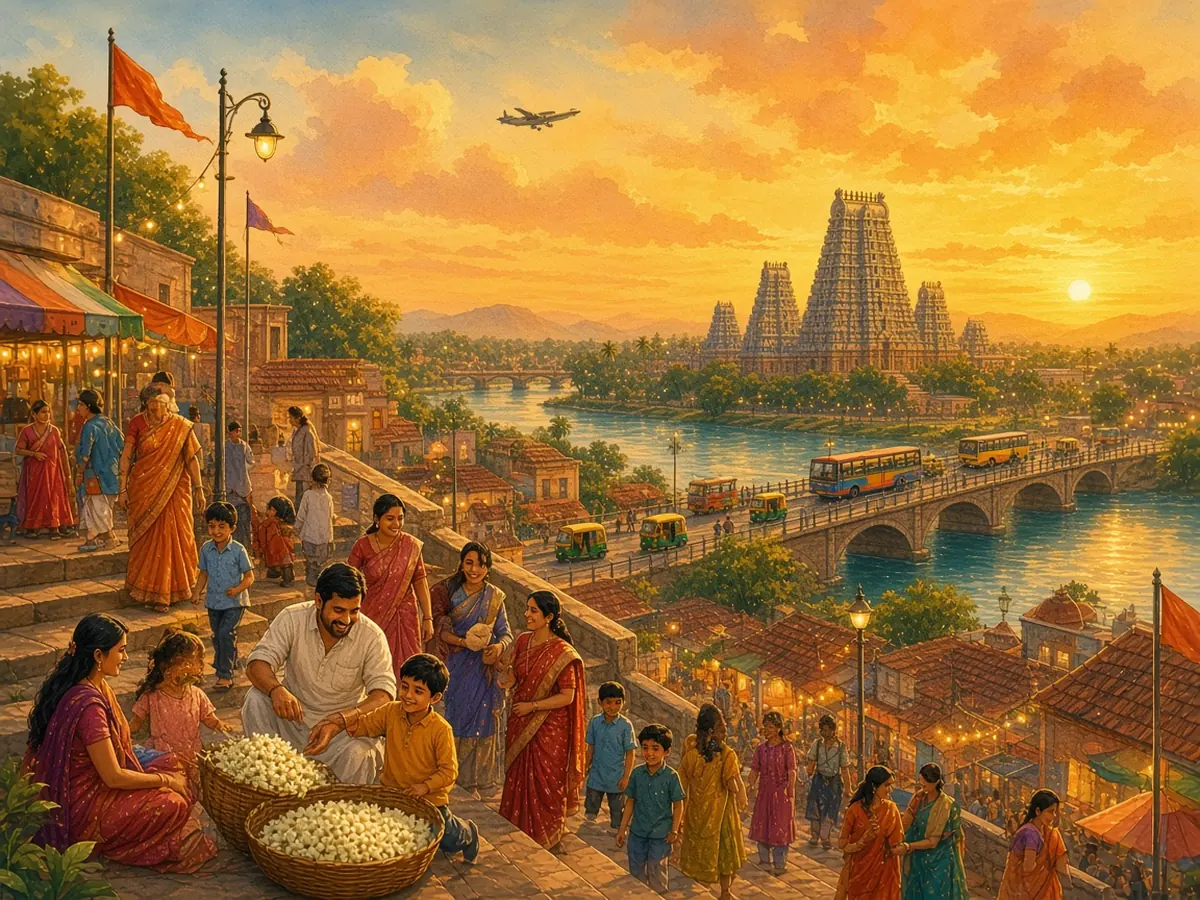
Today Trichy is a lively city of schools, colleges, factories, markets and festivals. From the Rockfort steps you can still see the Srirangam towers, the river bridges and the old rock itself.

NIT, IIM Tiruchirappalli and Bharathidasan University make it a centre of learning. Old and new live side by side, and the story goes on.

The End

Sources and notes

The facts in this book come from the public sources below. Dates are approximate for ancient times, and historians sometimes disagree. Legends and traditions are labelled on their pages.

About the pictures

All illustrations are imaginative storybook paintings made with AI. They are not photographs or exact records of how people, clothes or buildings looked at the time. The temple and hill shapes are simplified.

Spotted something wrong?

This book is a friendly introduction, not a scholarly work. For deeper reading, please check the sources above and local historians.